The California coast is full of wildlife if you’re paying attention. Gray whales breaching close enough to hear the blow. Osprey diving into the lagoon. Dolphins surfing a wave fifty feet from shore. Here’s what to look for and where to find it.
A few years ago, walking the cliffs above La Jolla, a gray whale breached less than a hundred yards from shore. Not a distant spout on the horizon — a full breach before it landed back in the water. It’s the kind of thing that stops you in your tracks and recalibrates whatever you thought you knew about the California coast.
This is a guide to the wildlife you might see on a coastal walk in California — where to find it, when to look, and what you’re actually seeing when you do.
Brown Pelican
The brown pelican is the California coast. It’s on the bluffs above above Cardiff, above every beach on the 101 — gliding low over the water with a wingspan of up to seven feet, riding the air just above the break without a wingbeat.
The brown pelican was listed as an endangered species in 1970, also due to DDT. Its recovery is now considered one of the great successes of the Endangered Species Act — populations have rebounded to over 100,000 birds along the Pacific coast. You’d never know they were ever in trouble watching a squadron of them glide past the Encinitas bluffs on any given morning.
The diving is the spectacle. Pelicans spot fish from height and plunge from up to 60 feet above the water, hitting the surface with enough force to stun the fish below. The pouch catches the fish and the water simultaneously — they tip their bill down to drain the water before swallowing. Watching this from the North County bluffs is one of the better free shows on the coast.
Best viewing: Year-round · Any coastal bluff from Cardiff to La Jolla · San Diego Beaches · La Jolla cliffs
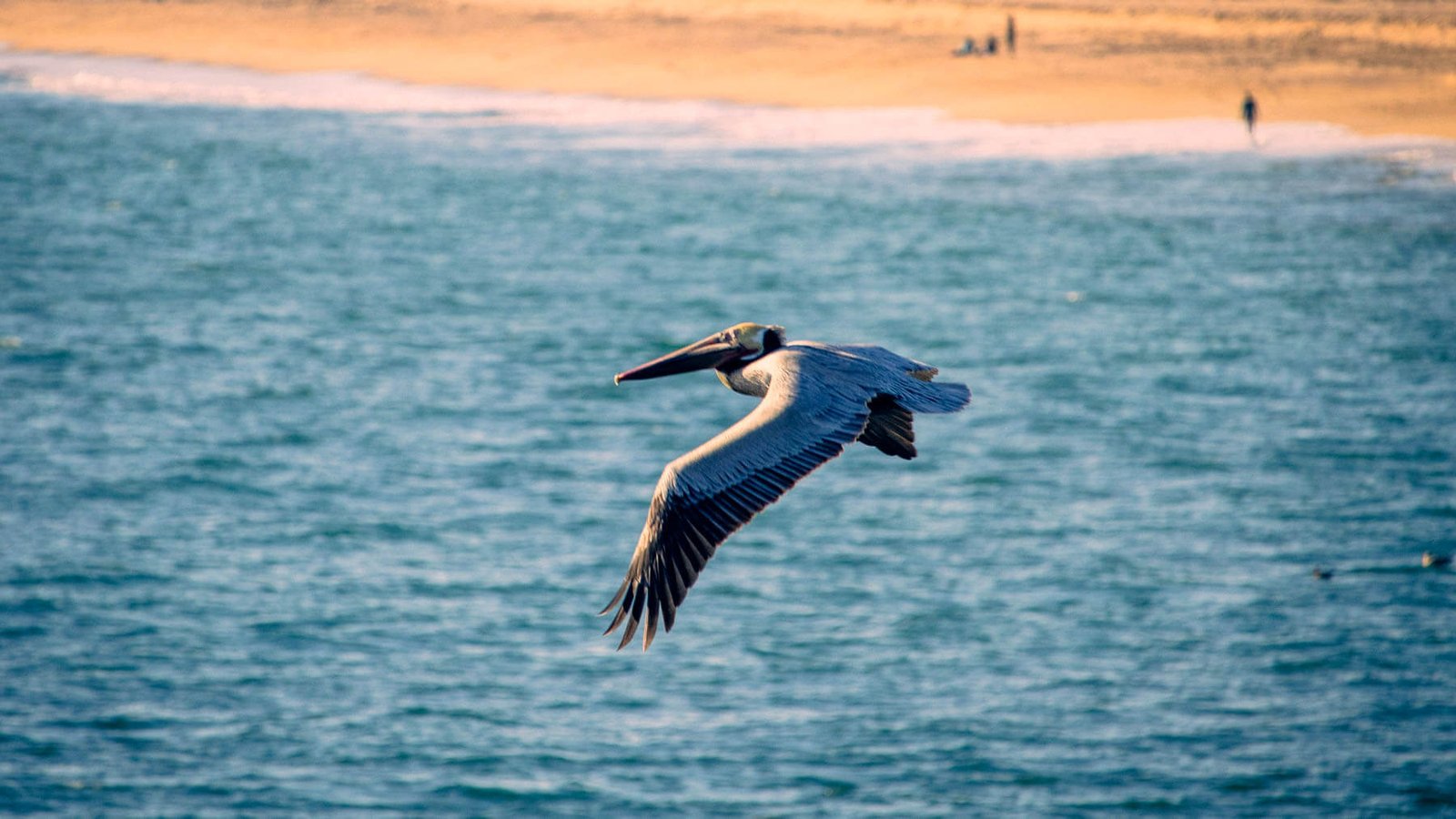
Brown pelican gliding above the North County San Diego coastline



Common Dolphin and Bottlenose Dolphin
Dolphins are the most reliably sighted marine mammals on the North County coast and the most likely to be doing something interesting when you spot them. Pods of common dolphins regularly travel within a few hundred yards of shore off Encinitas, Cardiff, and the Torrey Pines coast.
Bottlenose dolphins are the species most commonly seen from shore — smaller than common dolphins, with a blunt snout and curious behavior that makes them comfortable approaching the shoreline. The morning is the best time to look, when the water is calmer and the light is cleaner. The bluffs above Moonlight Beach and other bluffs in North County · Torrey Pines State Natural Reserve · Any coastal bluff from Solana Beach north
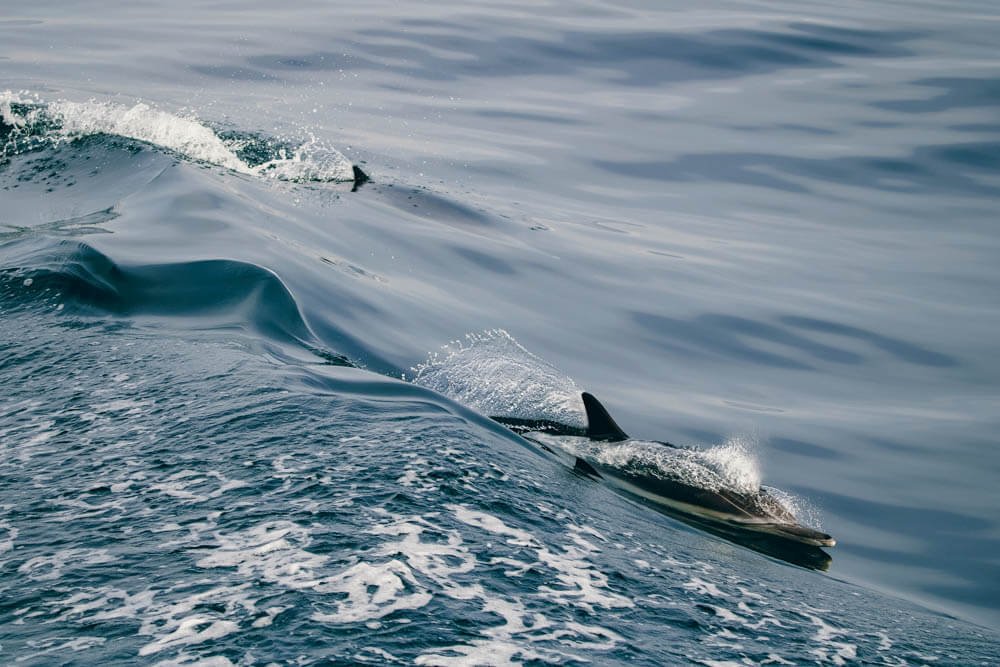
Dolphins off the Encinitas coast



California Sea Lion and Harbor Seal
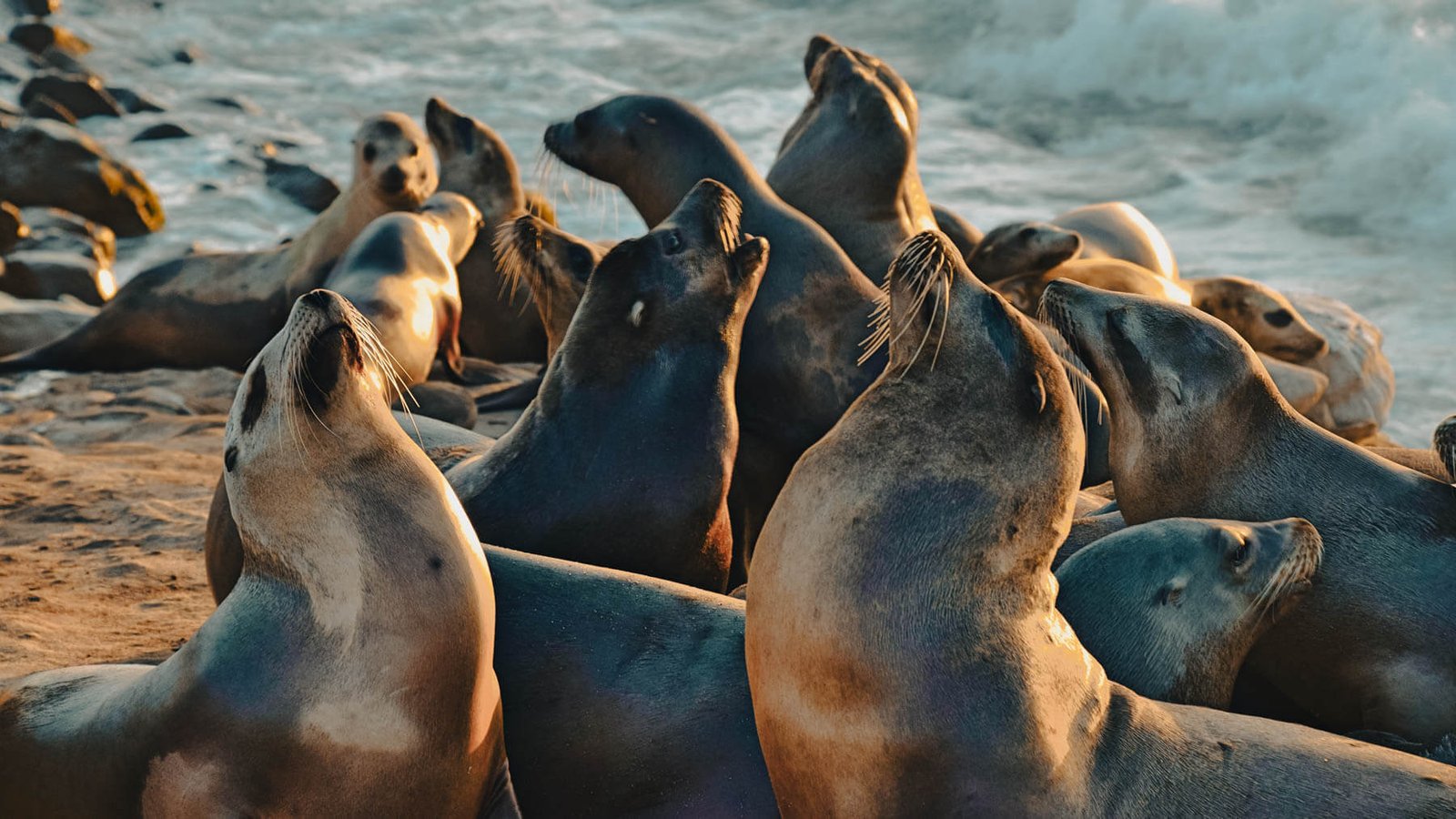
La Jolla is home to two of the most accessible urban wildlife encounters in California — a colony of California sea lions at La Jolla Cove and a harbor seal colony at the Children’s Pool a short walk south along the coast.
The sea lions at La Jolla Cove are loud, social, and completely at home around people — which has led to a real problem. Sea lions and harbor seals are wild animals and the temptation to approach them, particularly the seals at the Children’s Pool, has resulted in genuine disturbance to the colony. The right approach is to stay on the observation areas above the beach and watch from a respectful distance with binoculars or a long lens. The seals can see and smell you from a significant distance — if an animal raises its head and watches you, you’re already too close. The experience of watching a harbor seal colony from the cliff walk above is genuinely excellent without requiring proximity.
Harbor seals have a spotted coat and a rounded, gentle quality — they haul out on the beach to rest, regulate their temperature, and during pupping season from December through May, to give birth. Sea lions are larger, louder, and more theatrical — they bark, jostle for position on the rocks, and slide into the water with an ease that looks effortless given their size.
A docent program runs on weekends during pupping season at the Children’s Pool — rangers and volunteers are on hand to explain what you’re seeing and to help maintain appropriate distance.
Best viewing: Year-round · La Jolla Cove sea lions · Children’s Pool harbor seal colony — observe from the cliff walk, maintain distance · Pupping season December through May
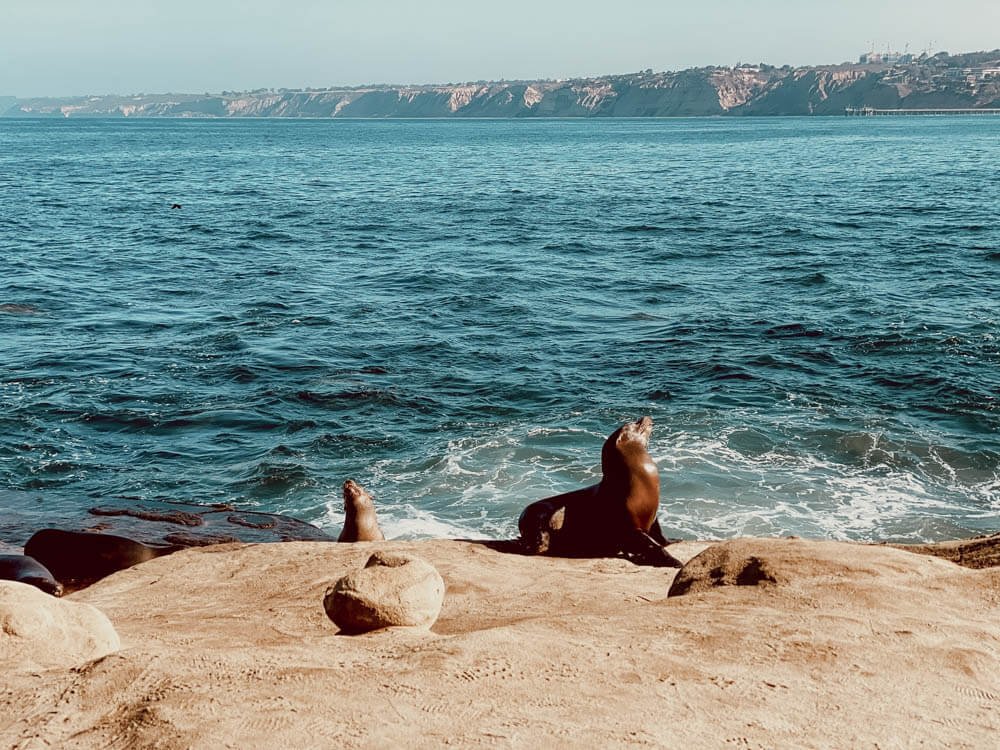
California sea lions near La Jolla Cove, viewed from the cliff path above
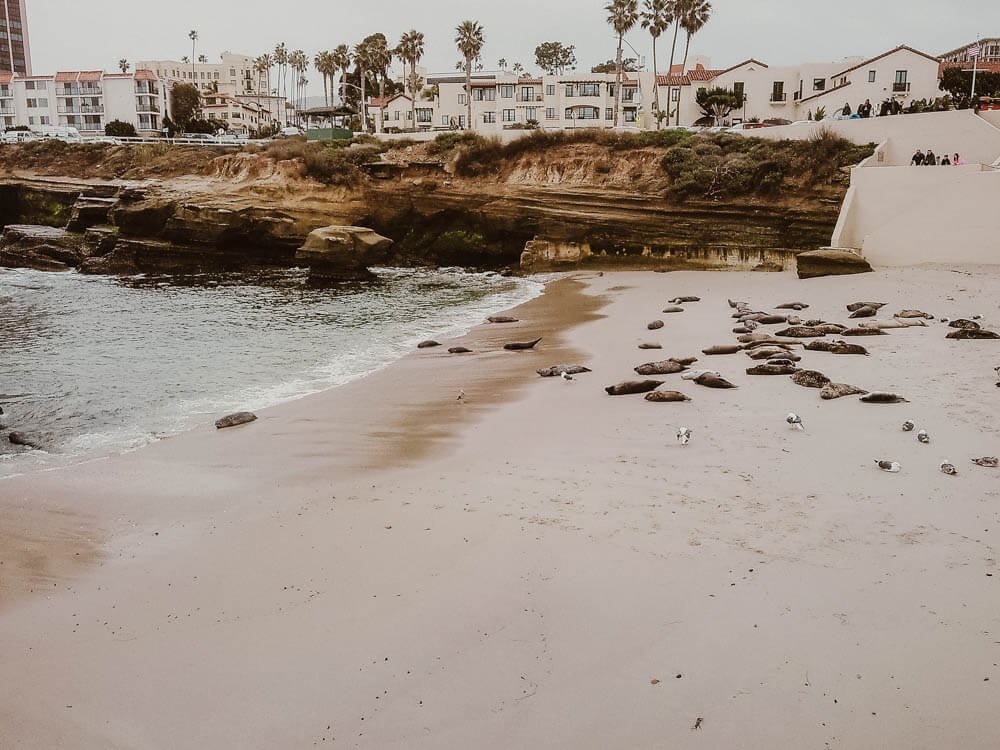
Harbor seal colony at the Children’s Pool, La Jolla California
Gray Whale
The gray whale makes one of the longest migrations of any mammal on earth — from feeding grounds in the Arctic to calving lagoons in Baja California Sur and back, roughly 12,000 miles round trip. The California coast is the highway.
The southbound migration runs from December through January, when the whales stay close to shore — close enough, on a good day, to see from the bluffs without binoculars. The northbound migration from March through April brings mothers and calves, moving more slowly, occasionally stopping to rest in the kelp beds just offshore.
The bluffs above Encinitas, the overlooks at Torrey Pines State Natural Reserve, Ellen Browning Scripps Park in La Jolla, and the Point Loma Lighthouse at Cabrillo National Monument are all reliable land-based viewing spots. Peak sighting rates in January and February consistently run above 90% from these locations. Look for the spout first — a column of vapor that can reach ten feet — then the dark shape rolling at the surface, then, if you’re lucky, the fluke as it dives.
Best viewing: December through April · Encinitas bluffs, Leucadia · Torrey Pines State Natural Reserve · Ellen Browning Scripps Park, La Jolla · Cabrillo National Monument, Point Loma
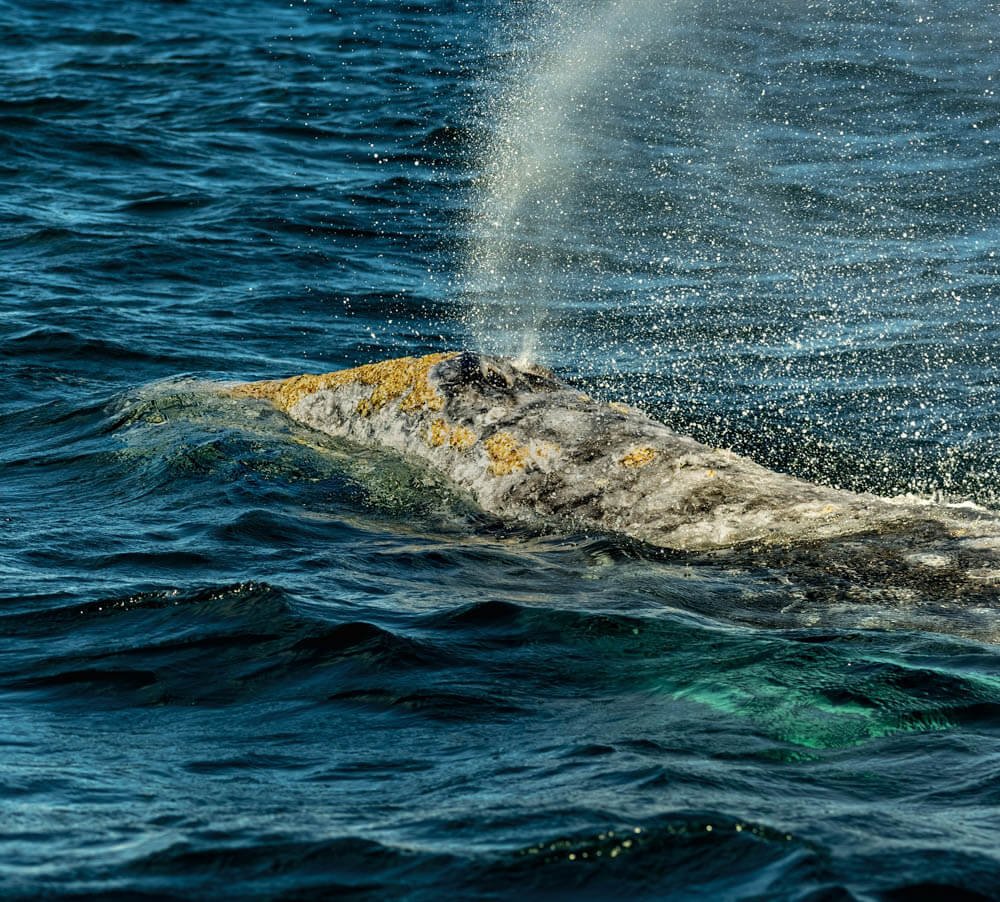
Gray whale on the California Coast



Osprey
The osprey is the bird you hear before you see — a sharp, whistling cry above the lagoon, and then the dive. A plunge from height, feet-first, into the water to catch a fish. It’s one of the more dramatic things that happens regularly in Encinitas.
Osprey are a consistent presence at San Elijo Lagoon, where the seven miles of interconnecting trails through coastal wetlands, salt marsh, and riparian scrub give you multiple chances to spot one hunting or perched above the water. Batiquitos Lagoon in Carlsbad, just north of Encinitas, is equally reliable. They often perch on top of street lights along streets near the lagoons to eat their prey. The osprey was once severely affected by DDT — the pesticide thinned their eggshells and caused widespread reproductive failure across the species. Their recovery since the DDT ban in 1972 is one of the better conservation stories on the California coast.
Look for a large brown-and-white bird with a distinctive bend in flight — the silhouette is unlike any other raptor on the coast. Watch for the hover before the dive. If you see a bird hovering over the lagoon with its head pointed down, that’s an osprey deciding whether to commit.
Best viewing: Year-round, most active during fall and winter migration · San Elijo Lagoon, Encinitas · Batiquitos Lagoon, Carlsbad · Agua Hedionda Lagoon, Carlsbad
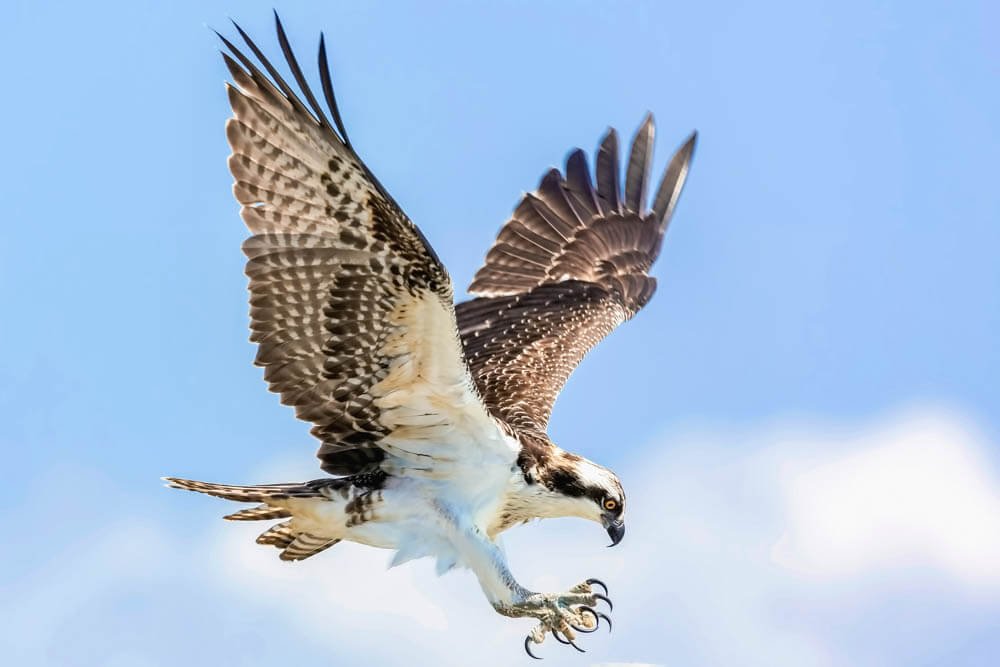
Osprey in flight
California Leopard Shark
Every summer, one of the most unusual wildlife encounters on the California coast happens in the shallow water just south of the Marine Room restaurant at La Jolla Shores.
From June through October, female leopard sharks aggregate in large numbers in the extremely shallow, warm water along this specific stretch of beach. They come inshore to warm their bodies and accelerate the development of their pups — a behavior called behavioral thermoregulation. The water is sometimes so shallow that dorsal fins break the surface. Groups of dozens of sharks are not unusual at peak aggregation.
Leopard sharks are completely harmless to humans — slender, spotted, and surprisingly tolerant of swimmers and snorkelers. The aggregation at La Jolla Shores is one of the most accessible shark encounters anywhere in the country. Snorkeling from the beach puts you alongside them in clear, calm water. Choose a sunny day with calm seas for the best visibility.
Best viewing: June through October · La Jolla Shores, just south of the Marine Room restaurant · Best visibility mid-morning when the sun is high · Snorkeling from the beach for the closest encounter
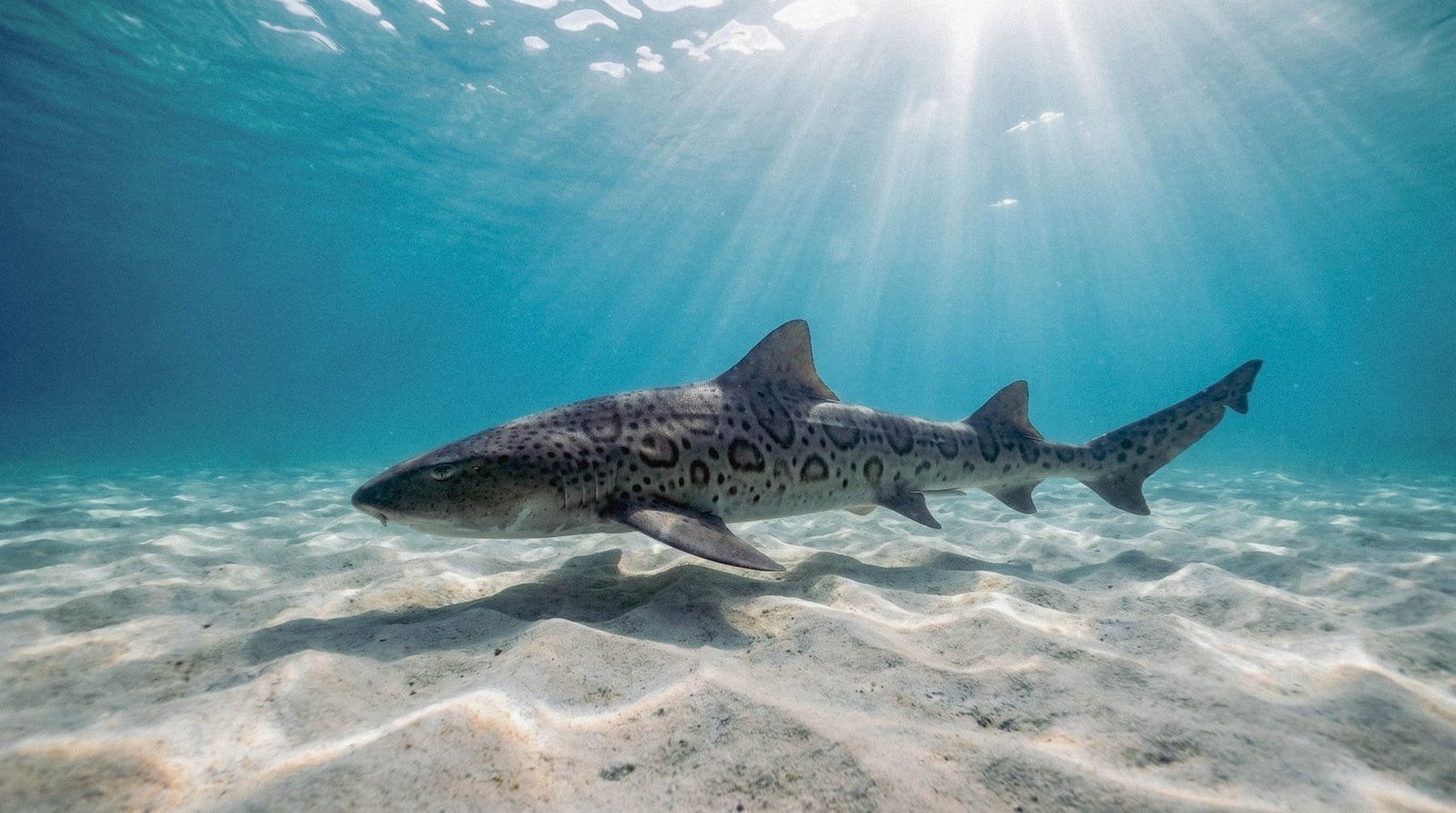
Leopard Sharks can be seen in La Jolla Shores in late summer
Great Blue Heron
The great blue heron is the bird that makes people stop and look twice — four feet tall, blue-gray, standing motionless in the shallows of a lagoon with a patience that seems physically impossible. They weigh about five pounds despite their height, thanks to hollow bones, and they move with a slow deliberateness that makes them easy to spot.
Herons hunt by standing still and waiting — they can remain motionless for extended periods before striking with a sharp beak in a movement too fast to follow. Fish, frogs, and occasionally smaller birds. The San Elijo Lagoon and Batiquitos Lagoon both support resident populations. The lagoon trail at San Elijo almost always produces at least one heron sighting, usually standing in the shallows of the marsh watching the water.
Best viewing: Year-round · San Elijo Lagoon, Encinitas · Batiquitos Lagoon, Carlsbad · Any coastal wetland on the North County coast
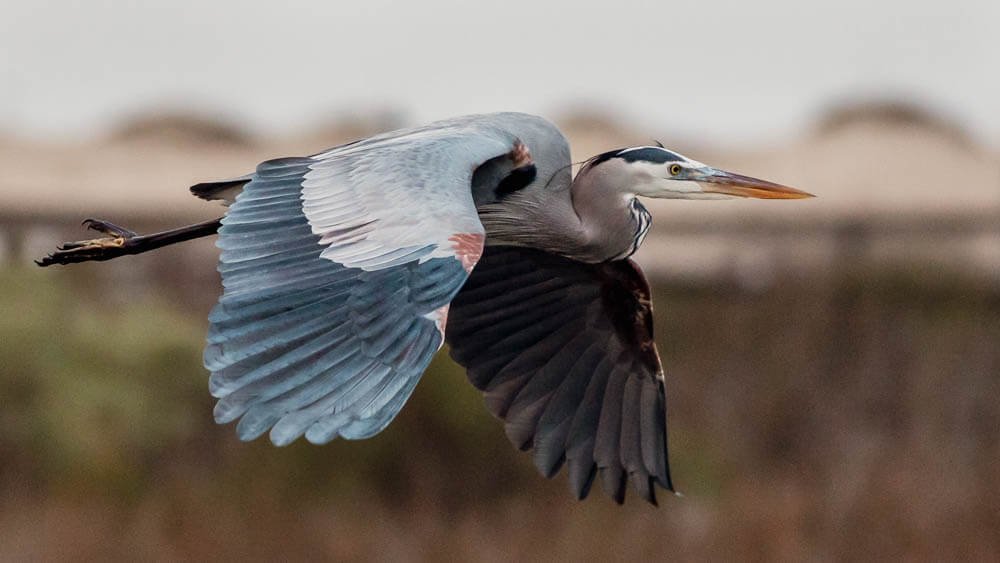
Great blue heron
California Grunion
The grunion is the most unusual wildlife event on the California coast — and the least likely to make anyone’s wildlife list until they see it.
From March through August, on the nights following the full and new moons, grunion run. The small silver fish ride waves onto the beach to spawn — females wriggling tail-first into the wet sand to deposit eggs while males curl around them to fertilize. Then the next wave takes them back. The whole process takes about thirty seconds per fish. Thousands of them, at once, on certain beaches on certain nights.
California is the only place in the world where this happens. You can legally catch grunion by hand during the open season — no equipment allowed, just hands. The California Department of Fish and Wildlife publishes predicted run dates annually at wildlife.ca.gov. State beaches from Malibu to San Diego host runs. Cardiff State Beach and Moonlight Beach in Encinitas are both on the run schedule. Arrive sometime after the posted time, wait for the wave to recede, and watch the sand move.
Best viewing: March through August, specific run dates at wildlife.ca.gov · Cardiff State Beach · Moonlight Beach, Encinitas · Point Loma beaches, San Diego
Monarch Butterfly
The monarch migration is the California coast wildlife event most people don’t know to look for until someone points to the tree above them and they realize it’s covered in butterflies.
Monarchs overwinter in coastal California from October through February, clustering in eucalyptus and pine trees in colonies that can number in the hundreds of thousands. Pacific Grove on the Monterey Peninsula is the most famous overwintering site — the Monarch Grove Sanctuary on Ridge Road has a free docent program on weekends at peak season. The butterflies cluster in the trees with their wings folded, looking like dead leaves, until the morning warms and the whole tree seems to come alive at once.
Natural Bridges State Beach in Santa Cruz also hosts a significant winter colony, making it a natural stop on the Highway 101 road trip north from San Diego. Pismo Beach Monarch Butterfly Grove on Highway 1 is the third major Central Coast site.
Best viewing: October through February · Monarch Grove Sanctuary, Pacific Grove · Natural Bridges State Beach, Santa Cruz · Pismo Beach Monarch Butterfly Grove
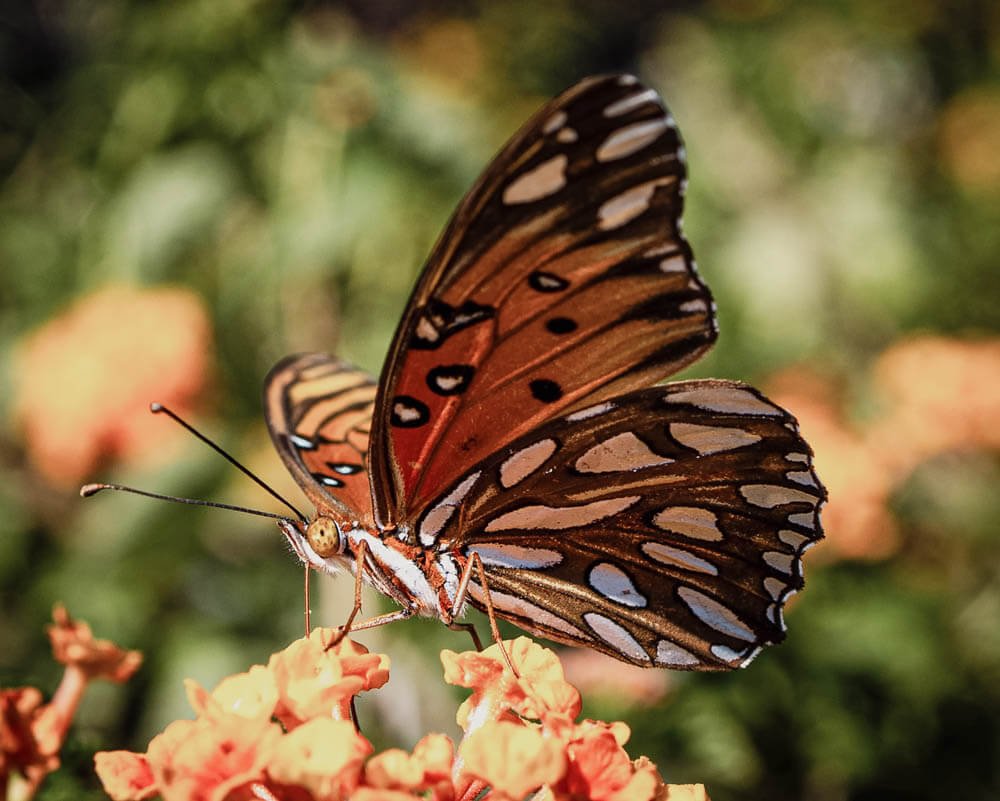
Monarch butterfly migration
Sandpipers and Shorebirds
The small birds running ahead of the waves on every San Diego beach are worth knowing by name. There are several species, and once you can tell a Sanderling from a Western Sandpiper from a Willet, the beach becomes considerably more interesting.
Sanderling
The Sanderling is the archetypal beach bird — the small pale shorebird that chases the waves in and out, running at the water’s edge with a mechanical speed that looks almost comical. It’s the one you’ve been watching without knowing its name.
Sanderlings breed in the high Arctic and winter on sandy beaches from California to South America. On the San Diego coast they’re present from August through April, foraging in the wet sand exposed by each receding wave — extracting tiny crustaceans, sand crabs, and invertebrates before the next wave comes in. In their winter plumage they’re very pale, almost white on the underparts with a soft gray back. In late spring, as they prepare to leave for the Arctic, some individuals acquire a rusty-orange breeding plumage on the head and breast.
They run in small flocks, moving as a unit along the wave line. If you approach, the whole flock relocates twenty yards down the beach without appearing to notice you. Moonlight Beach, Cardiff State Beach, and any open sandy stretch of the North County coast are reliable Sanderling habitat.
Best viewing: August through April · Any open sandy beach · Moonlight Beach, Encinitas · Cardiff State Beach
Western Sandpiper
The Western Sandpiper is the Sanderling’s smaller, darker cousin — and the one you’re more likely to see at the lagoon than on the open beach. While Sanderlings chase waves, Western Sandpipers prefer the quieter margins of estuaries and lagoons, wading in the shallow water at the edge of the mudflats and probing with a slightly drooped bill.
They’re one of the most abundant shorebirds in North America during migration — flocks of thousands move through California’s coastal wetlands from July through November on their way south from Arctic breeding grounds. At San Elijo Lagoon and Batiquitos Lagoon, concentrations of Western Sandpipers on the mudflats during fall migration can be impressive — dozens to hundreds of birds working the shallows at once.
In winter plumage they’re small, grayish-brown above and white below. The slightly drooped bill tip distinguishes them from the Least Sandpiper when the two are foraging together — which they often are.
Best viewing: July through April, peak migration July through November · San Elijo Lagoon mudflats · Batiquitos Lagoon · Mission Bay
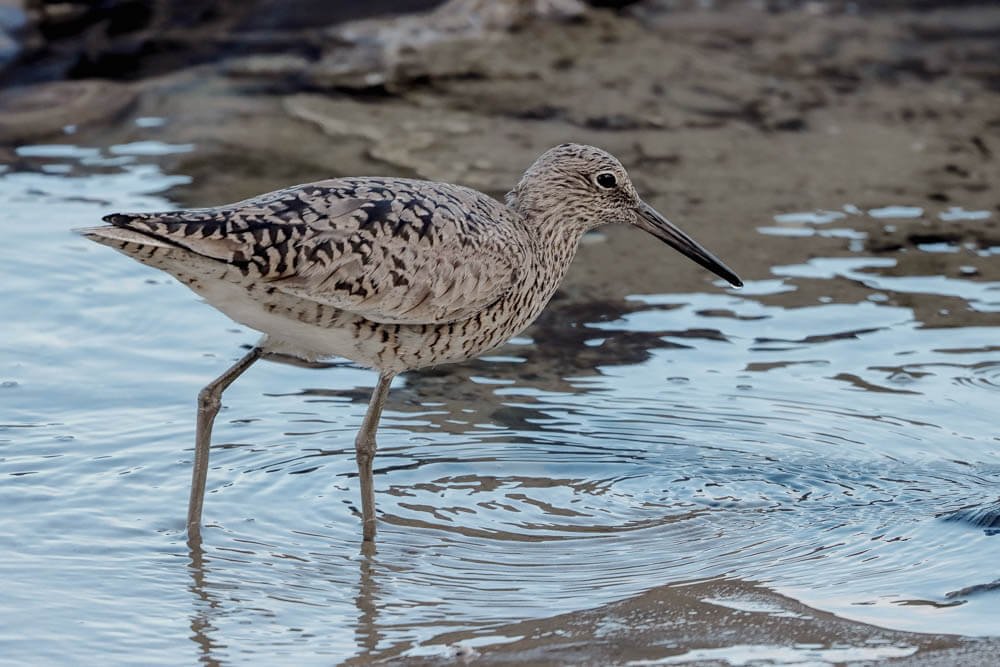
Western sandpipers at San Elijo Lagoon, San Diego coast
Least Sandpiper
The Least Sandpiper is the smallest shorebird in the world — genuinely tiny, barely six inches long, with yellowish legs that distinguish it from the Western Sandpiper’s black legs. The yellow legs are the field mark to look for when a small brown sandpiper is working the lagoon edge and you’re trying to sort out which species you’re looking at.
The Least Sandpiper is a common representative of California’s coastal shorebird community in fall and winter, often foraging alongside Western Sandpipers in mixed flocks on mudflats. They prefer slightly higher and drier ground than Western Sandpipers — the edges of the marsh rather than the water itself. San Elijo Lagoon is a reliable location throughout fall and winter.
Best viewing: August through April · San Elijo Lagoon · Batiquitos Lagoon · Any coastal estuary mudflat
Willet
The Willet is the large, plain-looking shorebird standing on the beach that you walk past without a second glance — until it flies. In flight, the Willet reveals bold black-and-white wing stripes that make it completely unmistakable and considerably more dramatic than its gray-brown standing appearance would suggest. It’s one of the better surprises in California shorebird watching.
Willets inhabit open beaches, bays, and rocky coastal zones and are commonly seen on Southern California beaches year-round. They forage along the wave line and on rocky reefs, probing for invertebrates with a long straight bill. On Cardiff State Beach and Moonlight Beach they’re a consistent presence, often standing in loose groups near the water’s edge. Larger than a sandpiper, smaller than a gull — gray legs, gray-brown plumage, long bill. The flight is the reveal.
Best viewing: Year-round · Cardiff State Beach · Moonlight Beach, Encinitas · La Jolla rocky shoreline
Whimbrel
The Whimbrel is the shorebird that makes experienced birders stop and pay attention — large, elegant, with a dramatically long downcurved bill and a striped crown that’s unmistakable once you’ve seen it. It’s the most distinctive shorebird on the San Diego coast and the one most likely to generate a double-take from someone walking the beach.
The Whimbrel can be seen along San Diego County’s coastline year-round but is most common in fall migration from July through September. It uses tidal mudflats, salt marshes, sandy beaches, and rocky shorelines — a flexible forager that shows up in multiple habitats. The long downcurved bill is adapted for extracting fiddler crabs from their burrows in the mudflat — a specialized tool for a specialized food source.
At San Elijo Lagoon, Whimbrels are regularly recorded during fall migration. At La Jolla Cove the rocky shoreline provides feeding habitat. The call is a distinctive rippling whistle — once you hear it you’ll recognize it immediately on future visits.
Best viewing: July through September peak, year-round presence · San Elijo Lagoon · La Jolla rocky shoreline · Batiquitos Lagoon
Marbled Godwit
The Marbled Godwit is the largest shorebird you’re likely to see on a San Diego beach — a long-legged, long-billed wader with warm cinnamon-buff plumage and an upturned two-toned bill that grades from pinkish at the base to dark at the tip. It’s about the size of a crow, which makes it stand out immediately in a mixed shorebird flock.
Godwits winter on California beaches and tidal mudflats from August through April, foraging by probing deep into the wet sand with that long bill. On Moonlight Beach, Cardiff State Beach, and the La Jolla shoreline, small groups of Godwits are a regular winter presence. At San Elijo Lagoon they use the mudflats alongside smaller shorebirds.
The Marbled Godwit breeds in the prairies of central Canada and the northern Great Plains — its presence on a San Diego beach is the end point of a migration that crosses half the continent.
Best viewing: August through April · Moonlight Beach, Encinitas · Cardiff State Beach · San Elijo Lagoon mudflats · La Jolla shoreline
Notes on Shorebird Watching
A few things that make shorebird watching significantly easier and more rewarding:
Timing matters. Low tide exposes the mudflats and wet sand where shorebirds feed. High tide concentrates them on the beach or forces them to roost. The two hours before and after low tide are the most productive for shorebird watching at lagoons and estuaries.
Binoculars help. Shorebirds are small and often at a distance. A pair of 8×42 binoculars transforms the experience — the difference between “a small brown bird” and “a Least Sandpiper with yellow legs working the marsh edge” is entirely a question of magnification.
Fall migration is the peak season. From July through November, the diversity of shorebird species on the San Diego coast is at its highest as birds move south from Arctic breeding grounds. Species that are uncommon or absent in winter can appear during migration, and the numbers of common species like Western Sandpipers can be substantial.
The San Elijo Lagoon Nature Center at 2710 Manchester Avenue in Cardiff publishes recent bird sightings and runs monthly guided bird walks. If you want help putting names to the small brown birds on the mudflat, this is the place to start.
Where to Start — The Best Coastal Trails Near San Diego
If you’re in San Diego or North County and want to see as much of this list as possible, these four locations cover nearly everything in the article between them.
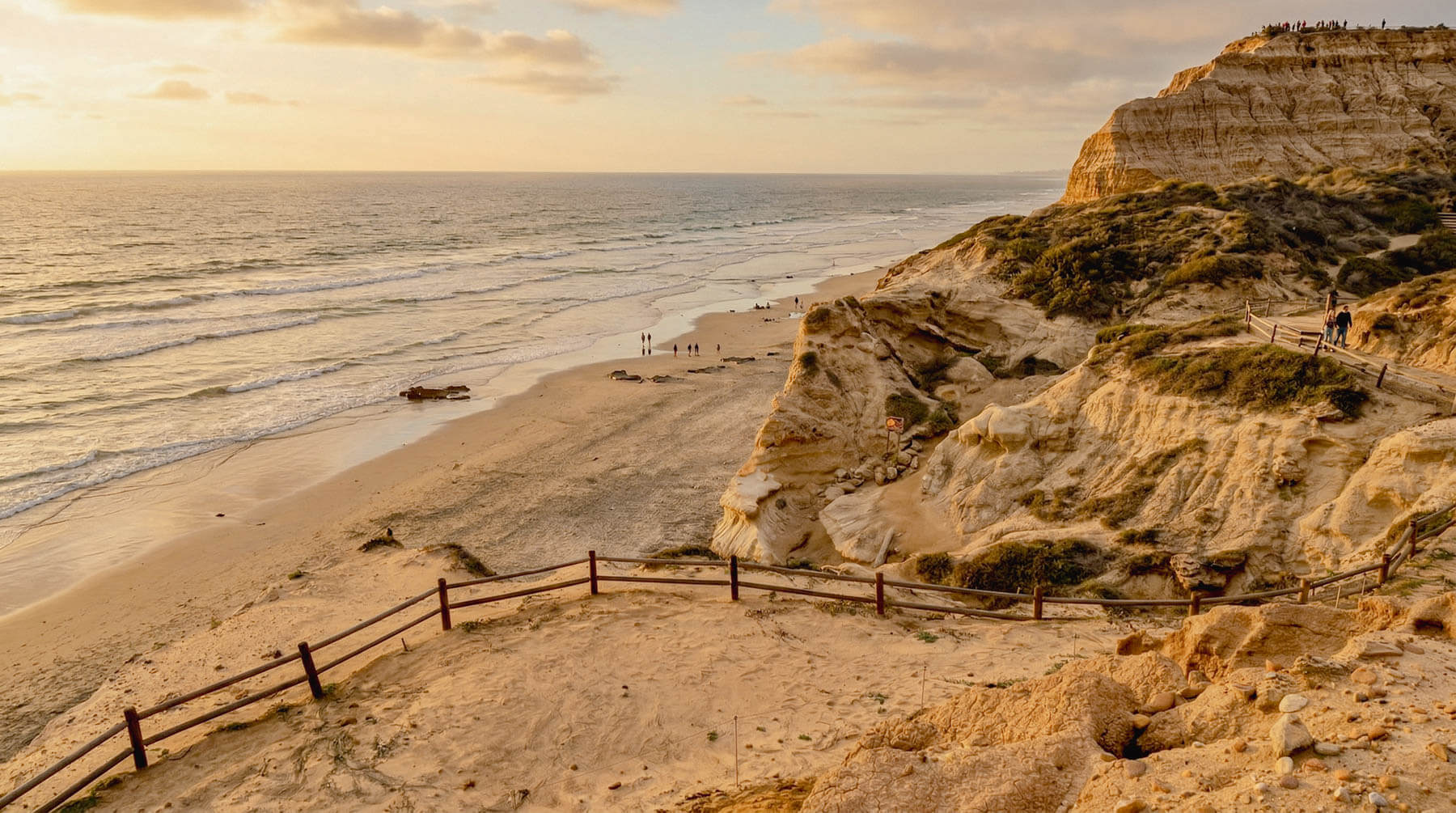
La Jolla Coastal Path is the place to begin. The cliff walk from La Jolla Cove south toward the Children’s Pool and north toward Torrey Pines passes sea lion haul-outs, harbor seal colonies and brown pelicans on the rocks below. The path is paved, flat, and accessible. On a clear morning with calm water you can see dolphins from the cliff edge. From November through April, scan the horizon for whale spouts — the southbound migration passes close to the La Jolla cliffs. Start at Ellen Browning Scripps Park and walk in either direction.
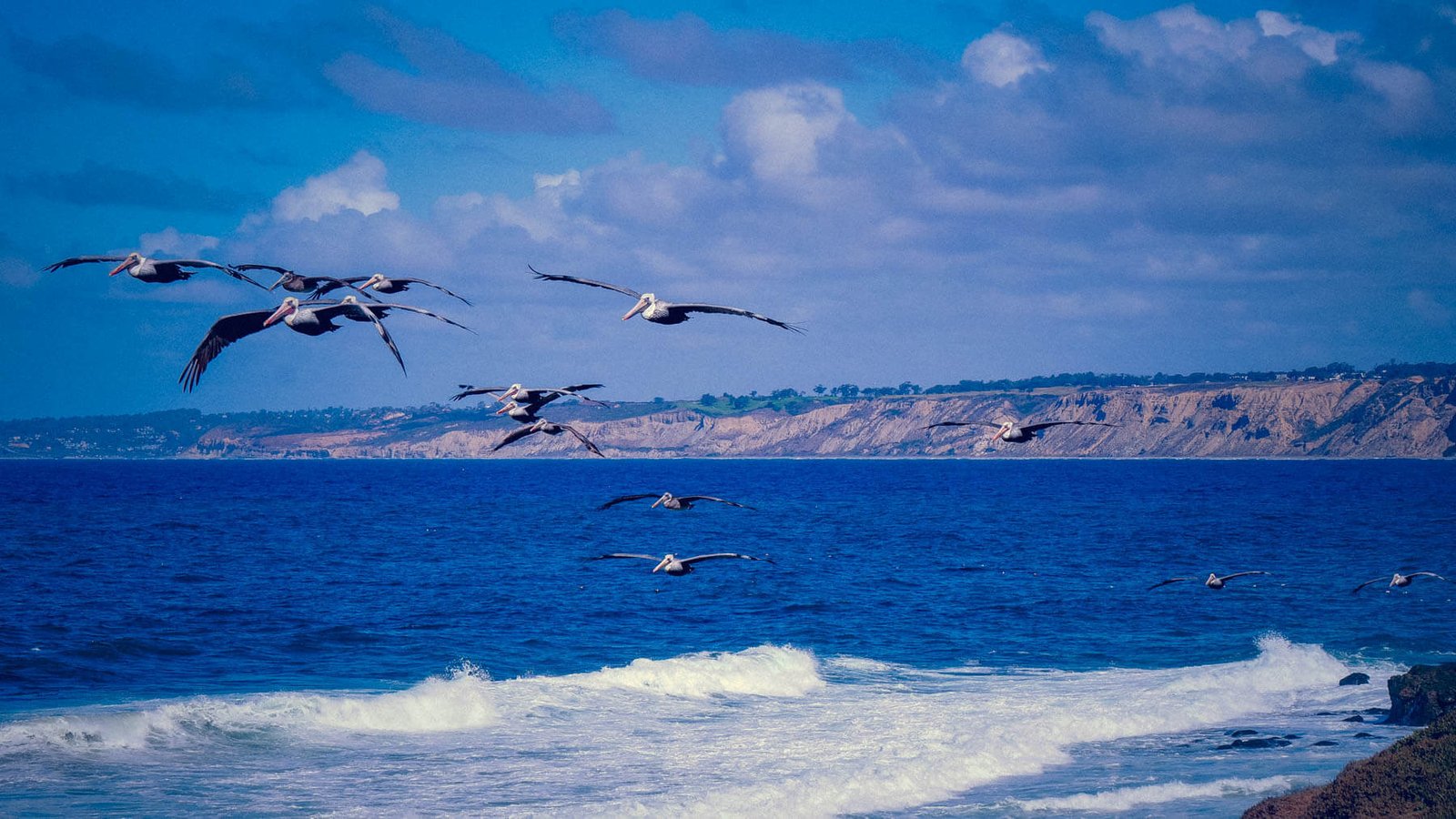
Brown pelican in flight in La Jolla
Torrey Pines State Natural Reserve is fifteen minutes north of La Jolla Cove on North Torrey Pines Road and gives you the elevated bluff perspective that makes whale and dolphin spotting significantly easier. The bluffs rise 300 feet above the Pacific — spouts that would be invisible from sea level are clear from up here. The Guy Fleming Trail loops through coastal sage scrub above the cliffs and is consistently productive for bird life including white-tailed kites, American kestrels, and during migration, warblers moving through the scrub. The beach below is one of the more undisturbed stretches of San Diego County coastline. The parking fee is $10-25 — arrive early on weekends. It’s a longer walk with a full experience of walking along the beach and climbing up the big hill just to get to the hiking area of Torrey Pines, but free parking is available along the 101 north of the state reserve.
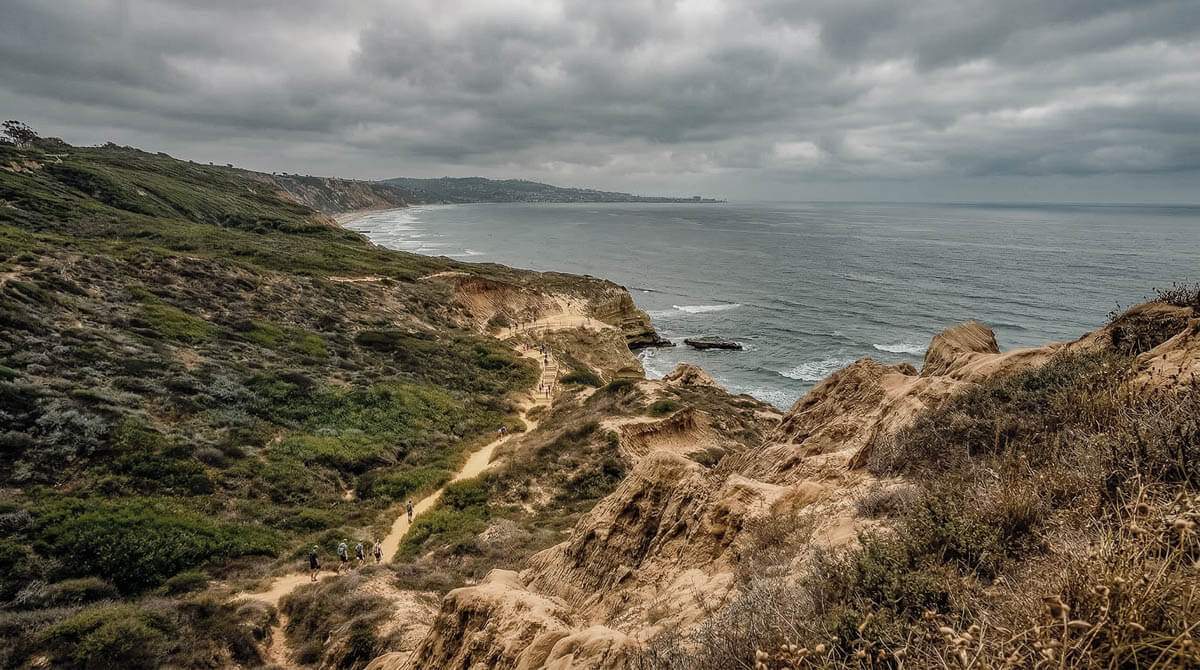
Torrey Pines hiking trail -heading south toward La Jolla
San Elijo Lagoon in Cardiff-by-the-Sea is the best single location for shorebirds, herons, osprey, and lagoon wildlife in North County. The seven miles of interconnecting trails through coastal wetlands, salt marsh, and riparian scrub give you multiple habitat zones in a single walk. Osprey are a consistent presence, herons and egrets are reliable year-round, and during migration the mudflats draw concentrations of sandpipers and shorebirds that reward a slow, patient walk. The San Elijo Lagoon Nature Center at 2710 Manchester Avenue has trail maps, naturalist guides, and a schedule of monthly guided bird walks. Free and open daily.
Batiquitos Lagoon Trail in Carlsbad, just north of Encinitas, is a quieter alternative to San Elijo with a well-maintained trail along the north shore of the lagoon. Over 185 bird species use the lagoon. Osprey, great blue herons, snowy egrets, black-necked stilts, and willets are all regular sightings. The trail runs from Gabbiano Lane at the west end — about two miles to the east end and back, flat and easy.
More from the Leucadia Mercantile Journal: Coastal North County San Diego Hiking Trails → · Highway 101 from San Diego to Santa Cruz → · A Weekend in Encinitas →